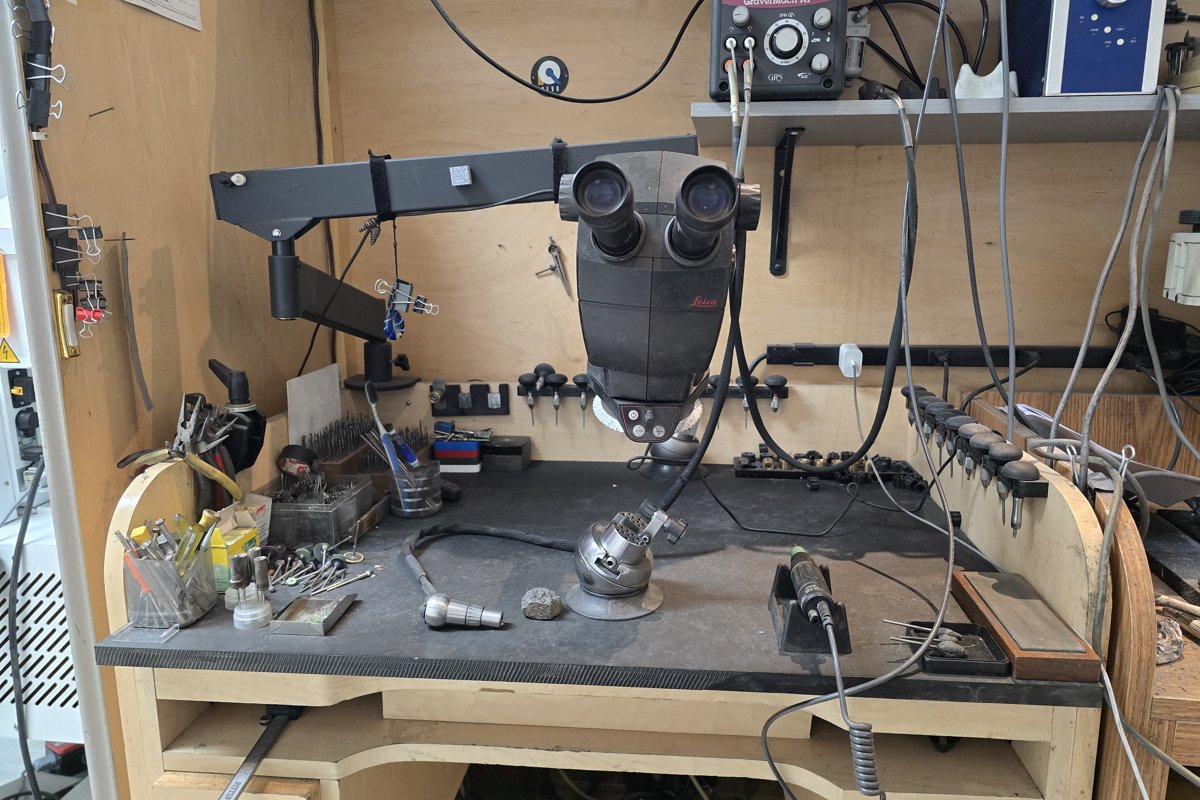
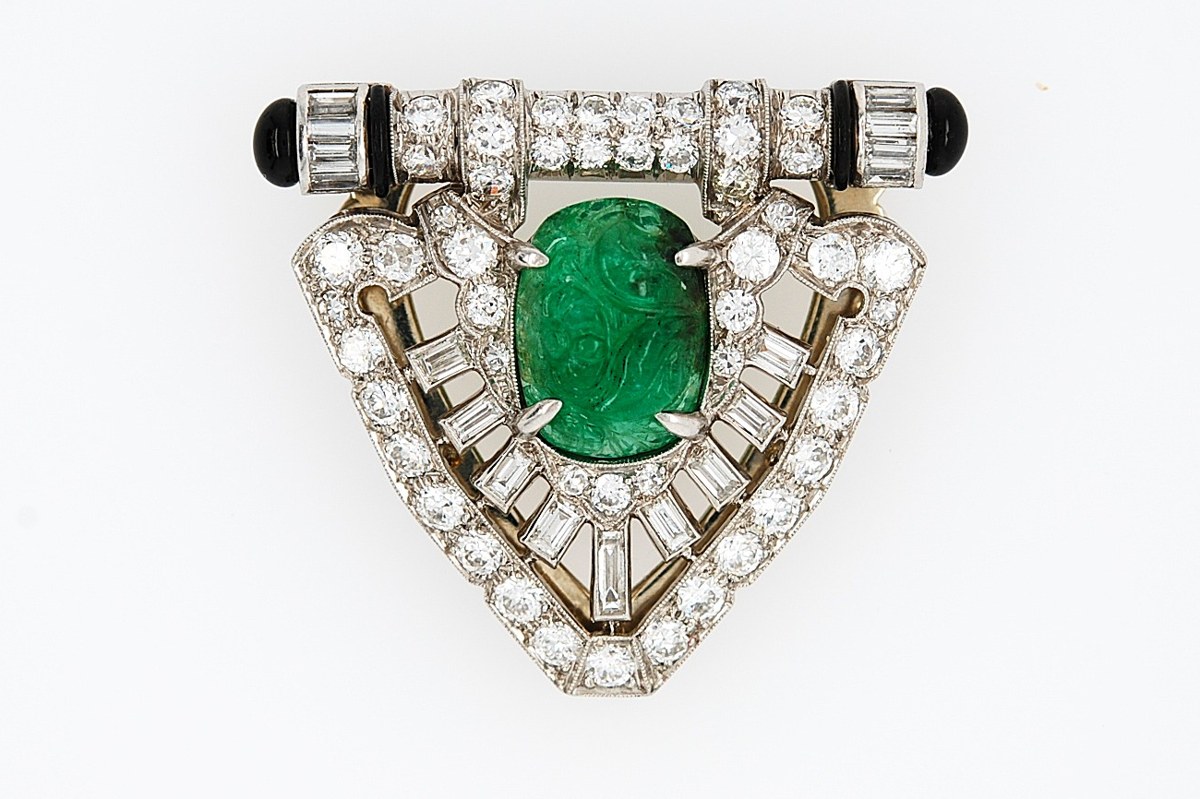
The Boston Gem Lab collaborates with highly skilled goldsmiths and designers who create mountings, repair jewelry, and restore vintage and antique jewelry to its original condition using hand-fabricated gold or platinum. Clients visiting the lab are often introduced to our goldsmiths working under a microscope, making engagement rings, or restoring vintage pieces created by renowned designers such as Schlumberger, Buccellati, and David Webb.
Cast Jewelry
Most modern jewelry is produced using the wax-casting method. Unfortunately, this process can introduce foreign contaminants, like investment and acid, into the metal. Additionally, cast jewelry typically undergoes a cleaning process that involves filing and shaving off imperfections and roughness from casting, which can dull intricate details. Areas that are difficult to reach with artisan tools may retain a rough, molten-metal texture, especially beneath set gemstones and in pavé settings.
Antique Hand-fabricated Pieces
At the Boston Gem Lab, we often appraise hand-fabricated pieces from the Edwardian and Art Deco periods. These one-hundred-year-old items usually just need a polish, and their hand engravings often remain in very good condition.
Hand Fabrication
In contrast, hand fabrication involves crafting jewelry directly from metal without wax, molds, or casting. The designer formulates a design in their mind, melts platinum or gold ingots, and shapes the metal into components such as wires, tubes, or plates. A single ring design may consist of dozens of individual parts, which are then assembled to create the final piece. Since each component is crafted individually before assembly, the metal surfaces can be polished to achieve a mirror-like finish. Without casting, there are no imperfections to clean off, resulting in flawless surfaces: round surfaces are perfectly round, and flat surfaces are perfectly flat. This method ensures extreme precision, as the craftsman controls every aspect of the design. Each area of the jewelry, including the undersides of settings and cathedral openings, will be free of imperfections. The joints are precise, seamless, and sharp. The finished piece is typically lighter and stronger than cast designs, and hand-forged jewelry nearly eliminates porosity—tiny air bubbles within the metal.
“Handmade” Is Not the Same
The term “handmade” has become a cliché and is often used as a marketing tool. However, truly hand-fabricated jewelry is quite rare, and the two should not be confused. While hand-fabricated pieces cost about the same as cast jewelry and mountings, the difference in quality is noticeable even from a distance. Consultations and artistic renderings are free.